

Core Ultra 7 365 Benchmarked on Geekbench; Performance Falls Short of Core Ultra 7 268V
The evolution of Intel’s Panther Lake CPUs has been keenly observed by tech enthusiasts and industry experts alike. While the mainstream Panther Lake-H processors have shown notable advancements in both CPU and iGPU areas, the power-efficient variants seem to lag behind their forerunners in terms of performance gains.
Exploring Panther Lake’s Budget Offering: Core Ultra 7 365 Performance Insights
Recent benchmarks have shed light on the performance of the affordable variant of Intel’s Panther Lake lineup. Taking inspiration from the Lunar Lake chips, Panther Lake also includes models with just Performance and LP-E cores. In a recent Geekbench test, these power-efficient CPUs offered a glimpse into their capabilities.
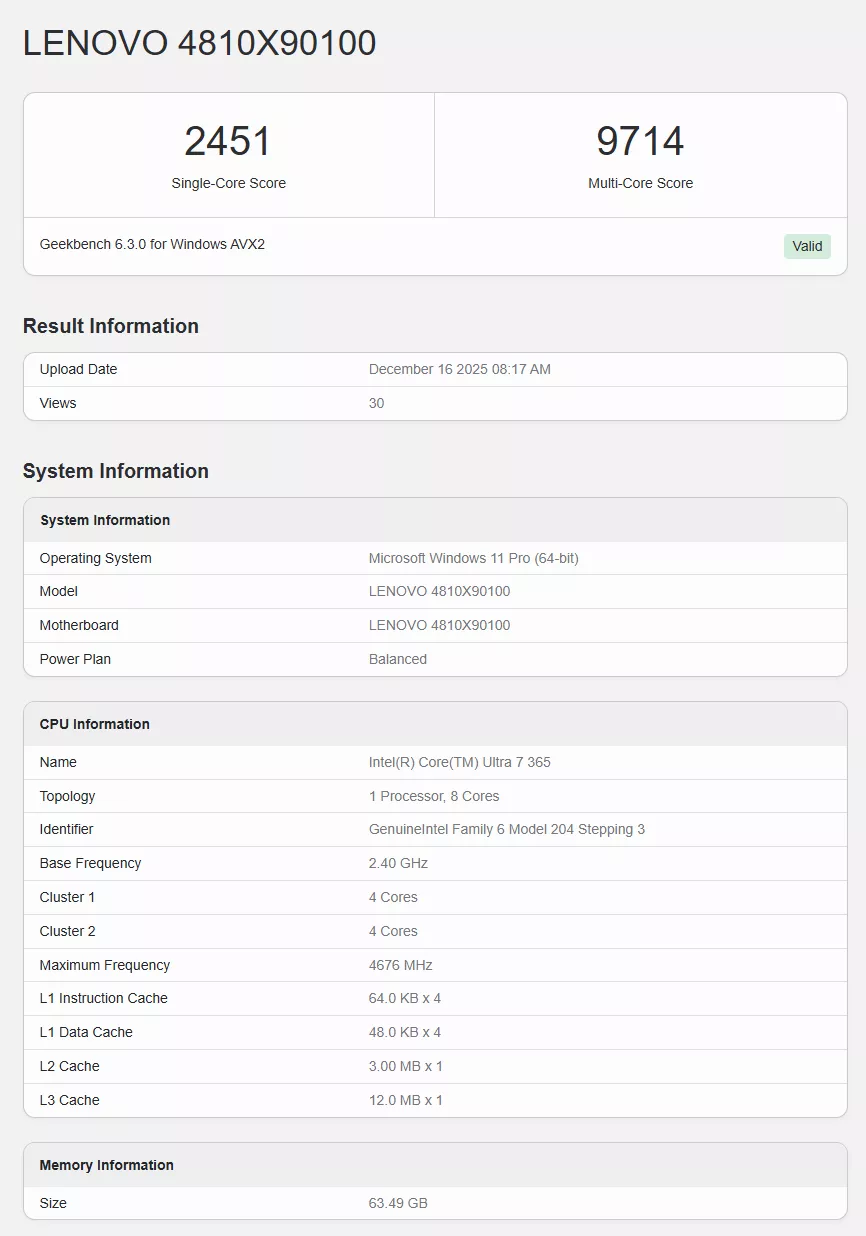
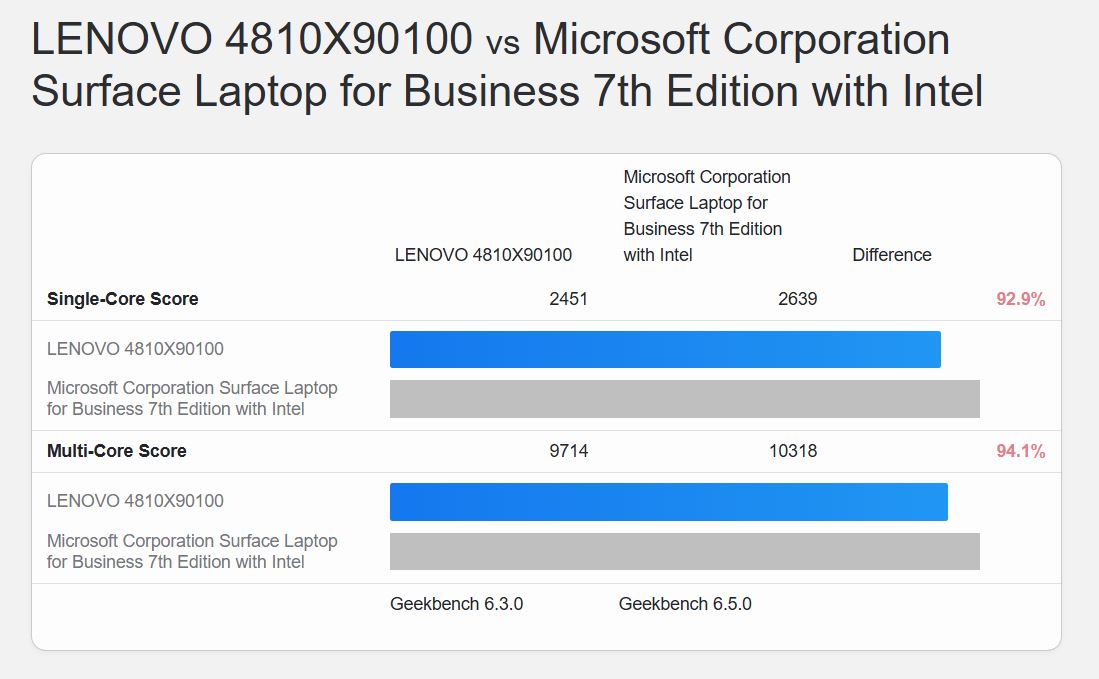
It’s important to remember that the benchmarks are based on an early sample, so scores may vary in the final version. The Core Ultra 7 365 registered 2,451 points in single-core and 9,714 points in multi-core tests using Geekbench 6.3 on Windows 11. In comparison, its predecessor, the Core Ultra 7 268V, scored 2,639 and 10,318 points, respectively. This data indicates the Core Ultra 7 365 is approximately 6-7% slower in performance compared to its predecessor.
Technical Specifications and Future Prospects
Both processors feature a configuration of 4 P-Cores and 4 LP-E-Cores. However, the Core Ultra 7 268V can reach speeds up to 5.0 GHz, while the Ultra 7 365 caps at nearly 4.7 GHz. The Ultra 7 365 operates within a TDP range of 22W-55W, whereas the Ultra 7 268V ranges from 17W-37W. The Panther Lake chip shows a 7% slowdown in multi-core and 6% in single-core performance when compared to the Ultra 7 268V. With further benchmarks, the performance gap might change, especially as it has been observed trading blows with the 16-core Core Ultra 7 255H on PassMark, offering a more accurate performance insight than Geekbench.
Currently, comprehensive benchmarks for the power-efficient PTL SKUs remain limited, as most tests focus on the Core Ultra X7/X9 series. These newer models do offer significant enhancements over the Arrow Lake family in both CPU and iGPU domains. As testing continues, it will be crucial to see if the power-efficient 8-core PTL models can surpass the performance of Lunar Lake chips, particularly given their less powerful iGPU.