

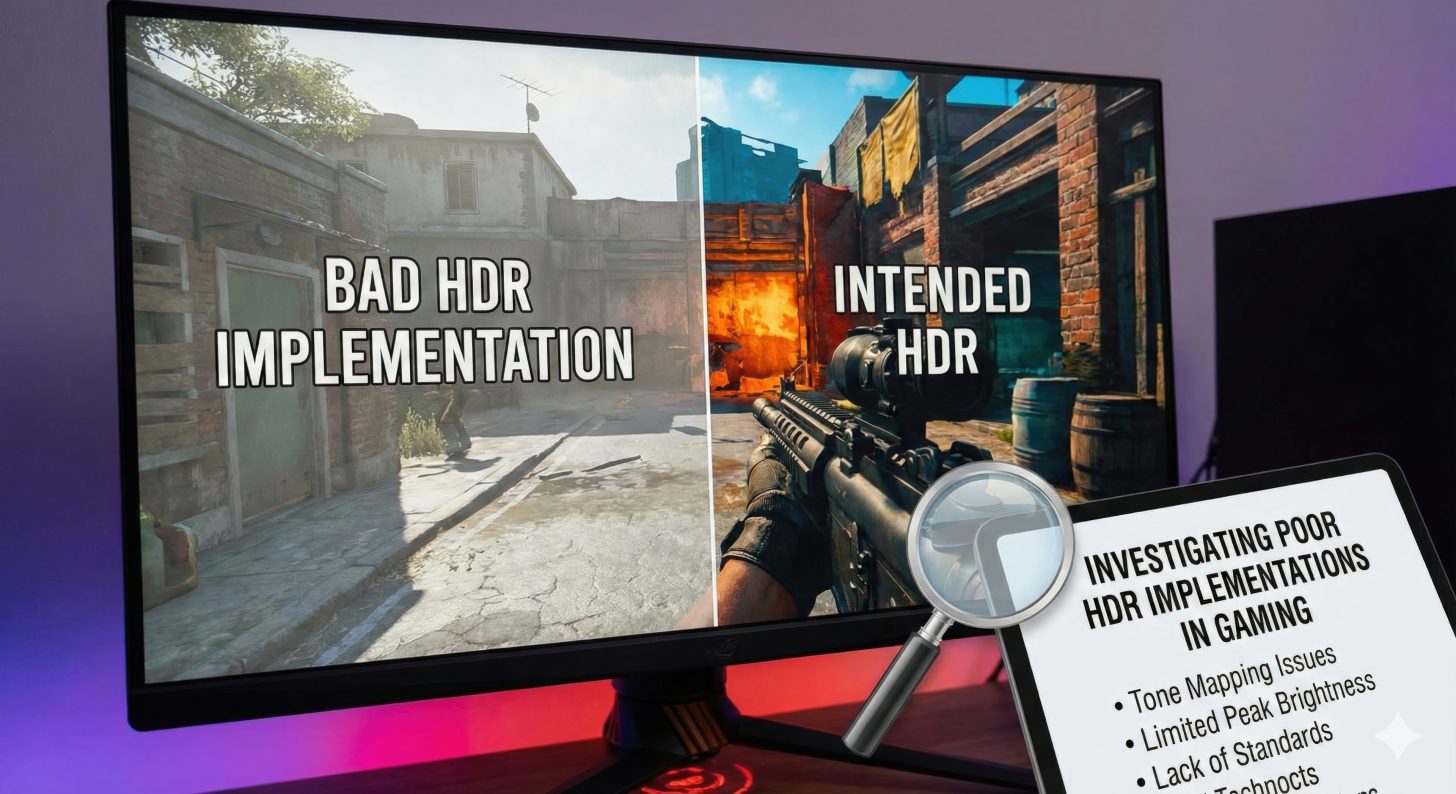
High Dynamic Range (HDR) gaming has long been hailed as a revolutionary feature with the potential to enhance the visual experience significantly. Back when the PlayStation 4 Pro was released on November 10, 2016, HDR support was expected to be a defining element, promising more vibrant graphics without the performance issues associated with higher resolutions. Yet, nearly a decade later, the promise of HDR seems unfulfilled, as many high-profile games still don’t support it, leaving gamers with capable displays disappointed.
The Rise and Stall of HDR Gaming
In the early days, HDR was met with enthusiasm from major developers like Naughty Dog and Playground Games, who touted its transformative benefits. The industry saw the formation of the HDR Gaming Interest Group (HGiG) in 2018, aimed at optimizing HDR content. Yet, despite these efforts, as of 2025, numerous games still lack HDR support, and even when available, implementations often fall short, offering subpar experiences that do not leverage the full potential of HDR technology.
Challenges in HDR Implementation
The gaming industry’s struggle with HDR isn’t due to technological barriers alone. Reports suggest that HDR is often sidelined due to misconceptions and a lack of priority compared to more hyped features like Ray Tracing. Game developers frequently view HDR as non-essential, leading to late or inadequate implementation. Despite HDR’s ability to significantly enhance visual quality, most developers remain indifferent, focusing instead on more familiar technologies.
Moving Forward: The Future of HDR Gaming
Filippo Tarpini, a veteran graphics programmer, is actively working to improve HDR’s integration in gaming through his company, Gamma Studios. He notes that while tools like Unreal and Unity make enabling HDR easy, the real challenge lies in properly implementing it. Tarpini advocates for a more standardized approach to HDR calibration and implementation across gaming platforms. He believes that as consumer displays continue to advance, games must move beyond the Rec. 709/sRGB color space to truly harness HDR’s capabilities.
For HDR to realize its potential, industry-wide cooperation is needed, with a focus on standardizing HDR calibration and promoting its benefits. By increasing awareness and refining implementation techniques, HDR can finally deliver on its promise, enriching the gaming experience with unparalleled visual depth and realism.