

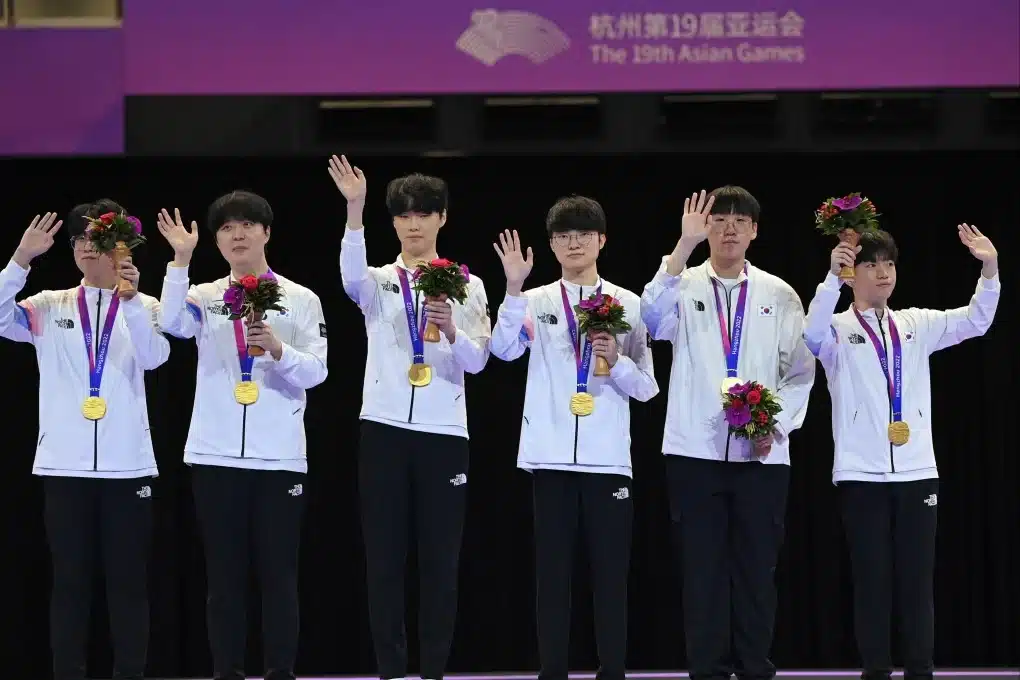
South Korea is gaining attention as a potential host for the inaugural Olympic Esports Games (OEGs) following the breakdown of partnership talks between the International Olympic Committee (IOC) and Saudi Arabia. This development was the highlight of a recent parliamentary discussion in Seoul, engaging lawmakers, sports officials, academics, and industry representatives on December 22nd. The forum pondered whether South Korea should seize the opportunity to host the first edition of the OEGs.
Esports as a Strategic Industry
The forum, titled “Forum on Hosting the Olympic Esports Games in Korea,” was organized by People Power Party lawmakers Koh Dong-jin and Jin Jong-oh, together with the Korean Sport & Olympic Committee (KSOC) and the Korea e-Sports Association (KeSPA). Held at the National Assembly Members’ Office Building, it delved into the strategic value and risks of hosting the Games. Koh emphasized the synergy between the gaming industry and cutting-edge technologies, suggesting that esports should be recognized as a key industrial component, rather than mere entertainment. Hosting the Olympic Esports Games could offer substantial industrial benefits for Korea by leveraging its expertise in hardware, software, and player talent.
Jin, an Olympic gold medalist, contextualized the discussion within global politics, mentioning pressure from China’s technical standards and Saudi Arabia’s economic might. He argued that Korea should use its international connections to bolster any future bid for hosting.
KeSPA Calls for Consecutive Hosting Strategy
From an organizational standpoint, Kim Cheol-hak, Secretary General of KeSPA, proposed that South Korea aim to become the first host of the OEGs to solidify its reputation as the ‘birthplace of esports.’ Warning against the limited impact of hosting just one edition, Kim suggested holding two or three consecutive editions. This approach would set a standard operational framework for global use and spotlight Korean games like PUBG: Battlegrounds and FC Online.
Jin highlighted the need to present esports as a comprehensive cultural model, integrating media, content, and fandom to persuade the IOC, rather than merely relying on Korea’s past esports accomplishments.
Industry Raises Concerns Over Olympic Fit
Some industry leaders were skeptical about the Olympic brand’s appeal among core esports enthusiasts. Oh Ji-hwan, CEO of Nongshim RedForce, criticized the IOC’s emphasis on ‘virtual sports,’ claiming this diverges from the audience’s interest in competitive games such as League of Legends and VALORANT. He cited Saudi Arabia’s Esports World Cup as evidence that successful independent events can exist without Olympic involvement, suggesting Korea might benefit more from creating its own international esports events.
Kim Woo-jin, Senior Team Leader at KRAFTON’s esports division, stressed the importance of including Korean-developed games as official events if hosting is pursued. He noted the active promotion of domestic titles by Japan and China in international competitions, calling for coordinated diplomatic efforts if Korea moves forward with a bid.
The forum underscored the strategic potential of hosting the OEGs but also highlighted the significant structural, financial, and cultural challenges South Korea would face in launching a formal bid.