

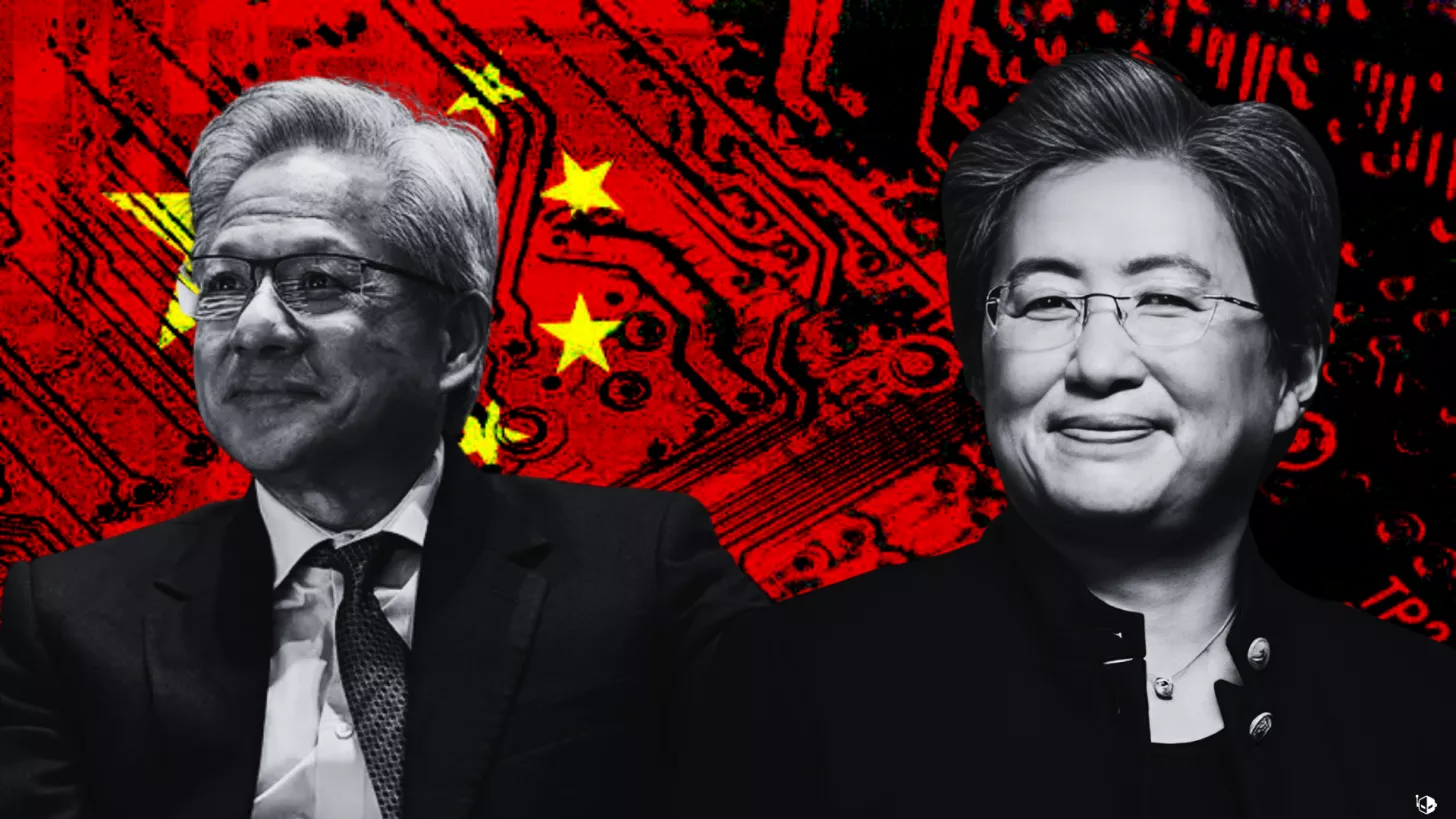
The landscape for US chip manufacturers in China is shifting once again. Both NVIDIA and AMD are making strategic moves to capture the market, but the current environment presents new challenges and opportunities.
Recent developments have seen NVIDIA reintroducing its Hopper H200 AI chips to China, and there’s significant news for AMD as well. In early 2025, American chip companies struggled with selling to China due to geopolitical tensions, which affected firms like NVIDIA and AMD. This situation was so severe that NVIDIA’s CEO, Jensen Huang, stated their market share in China had hit ‘zero percent’, illustrating a complete disruption of their business in the region.
NVIDIA/AMD China Breakthrough: A Mix & Match of Lobbying & Architectural Adjustments
Political influences have significantly impacted the business landscape for AI chip manufacturers in China. NVIDIA and AMD worked continuously with the US administration to ensure compliance with architectural regulations. A breakthrough occurred in August when President Trump announced that the US government would take a 15% cut of total shipments to China by AMD and NVIDIA, allowing them to sell chips like the Hopper H20 and Instinct MI308 AI chips.

Despite progress, Beijing showed resistance towards the H20 AI accelerators, launching a regulatory investigation into potential security concerns. China pushed domestic AI firms to adopt chips from local companies like Huawei, Cambricon, and BirenTech, reducing NVIDIA and AMD’s chances of re-entering the Chinese market. During this time, Jensen Huang stated their complete exit from China.
At the moment, we are 100% out of China, and so China is 0%. We went from a 95% market share to 0%, and so I can’t imagine any policymaker thinking this is a good idea. In all our forecasts, we assume zero for China. If anything happens in China, it will be a bonus.
Meanwhile, China was advancing rapidly in AI, with companies like Huawei unveiling competitive chip roadmaps. This raised skepticism in the AI industry, as China was catching up to the US, leading to further regulatory developments for NVIDIA/AMD. President Trump recently announced that NVIDIA could sell its Hopper H200 AI chips to China, albeit with a 25% tax. This decision, while opening the door for NVIDIA, also introduces supply chain complexities and added costs.

The return of NVIDIA and AMD to China is significant, with NVIDIA offering a more aggressive option and AMD poised to follow with the MI308 accelerators. The renewed interest and approval of AI chips mark a pivotal moment for US chip manufacturers in the Chinese market.
NVIDIA’s H200 AI Shipments Now On-Track For Mid-February; AMD Sees Interest In Instinct MI308 From Alibaba As Well
Reports suggest that NVIDIA’s H200 AI shipments are set to begin by mid-February, following a thorough review of license applications for H200 sales to China. The initial batch could ship 40,000 to 80,000 H200 AI chips, with plans to increase capacity for Chinese demand.
Despite being an older model, the H200 remains highly desired in China, primarily due to challenges in training frontier models on domestic AI chips. NVIDIA’s technology is the preferred choice for such workloads. Similarly, reports indicate that AMD is preparing to supply Alibaba with up to 50,000 Instinct MI308 AI chips, representing one of the largest orders for the region in recent times. This move highlights China’s push for increased computing power.

The reopening of the Chinese AI market to American manufacturers is a significant development. It signifies a new era of opportunity and challenges as companies navigate complex regulatory landscapes and burgeoning demand.