

In the world of competitive overclocking, a new milestone has been achieved. An enthusiast has taken the top spot on the HWBot leaderboard by setting a new frequency record. Overclockers around the globe are abuzz with the latest accomplishment that showcases the thrilling potential of modern hardware.
Shattering Records with AMD Ryzen 7 9800X3D
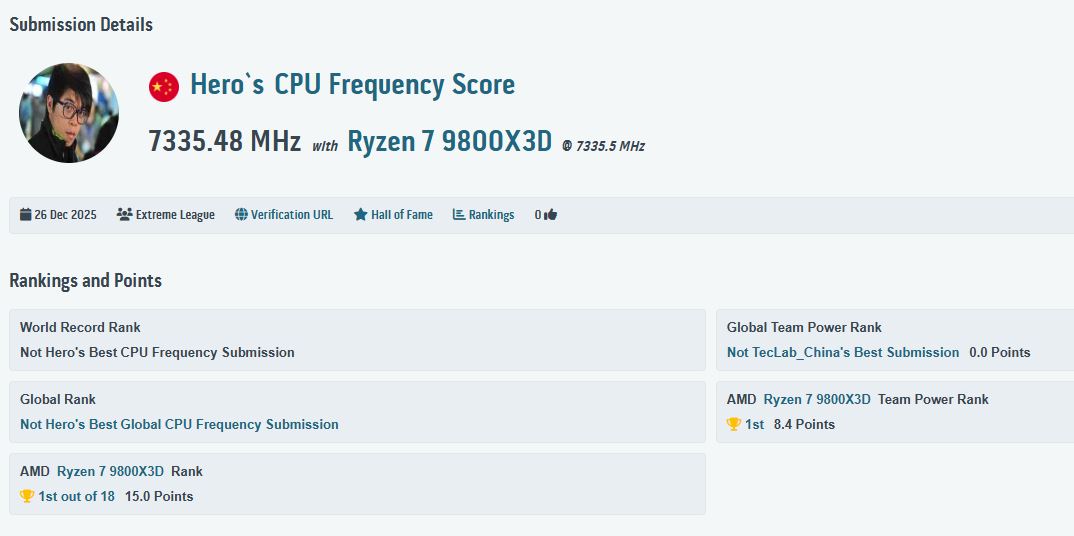
Overclocker “Hero” from China has set a new world record using the AMD Ryzen 9800X3D, surpassing previous achievements. This feat marks a significant advancement since the last renowned record by “hicookie,” which reached 7313 MHz on the GIGABYTE X870E AORUS Tachyon ICE motherboard. The new benchmark has now reached an impressive 7335.48 MHz. This marks the third time the 9800X3D has exceeded the 7000 MHz threshold.
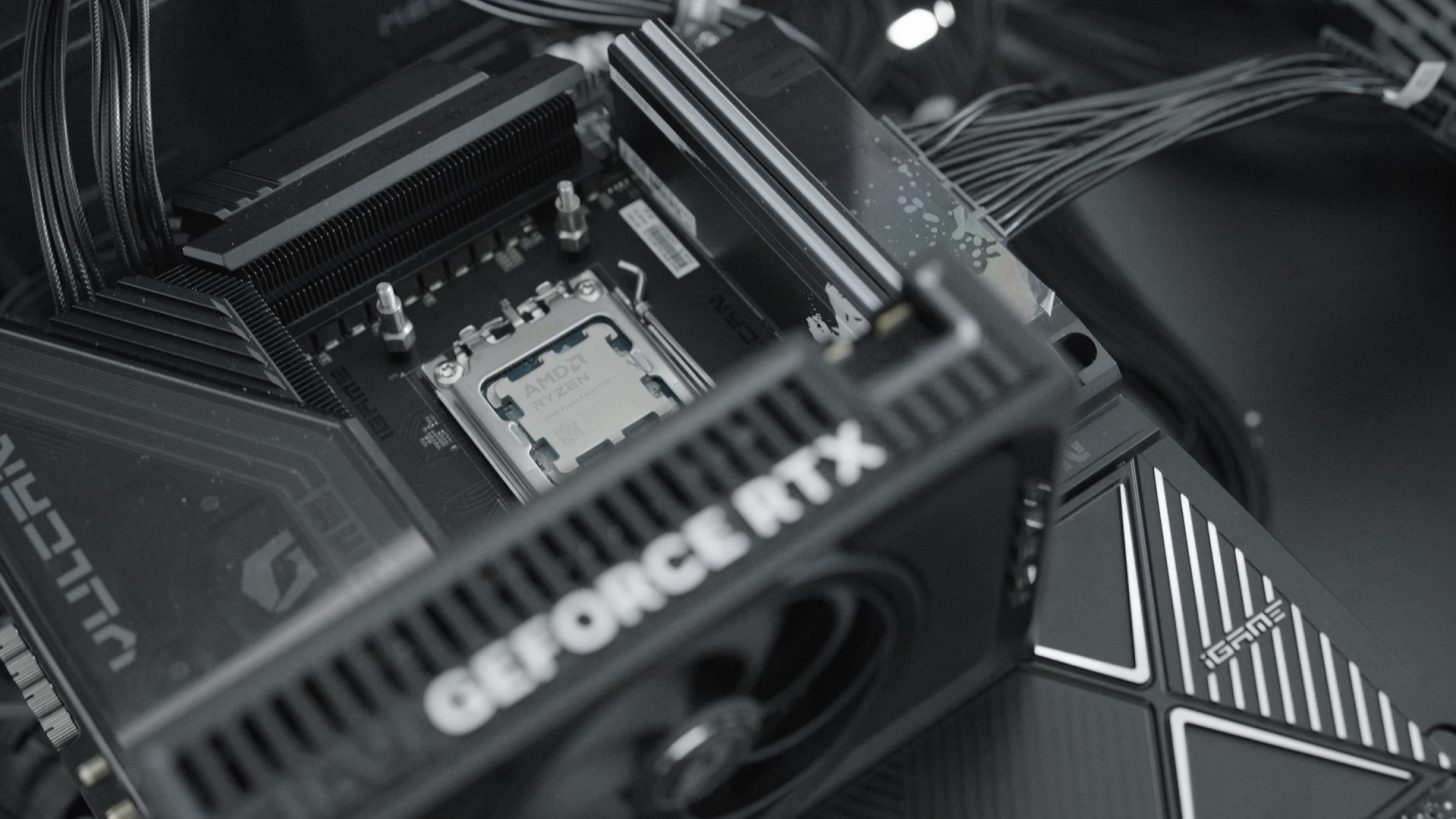
Hero achieved this using the Colorful iGame X870E Vulcan OC V14 motherboard, a flagship model released two weeks ago. Known for its robust 18+2+2 power phase VRM featuring 110A DrMOS, this motherboard is designed for extreme overclocking, both for CPUs and memory. There are expectations that this board will continue to break records, including memory records, as it reportedly supports up to 10,000 MT/s.
High Voltage and Performance Validation
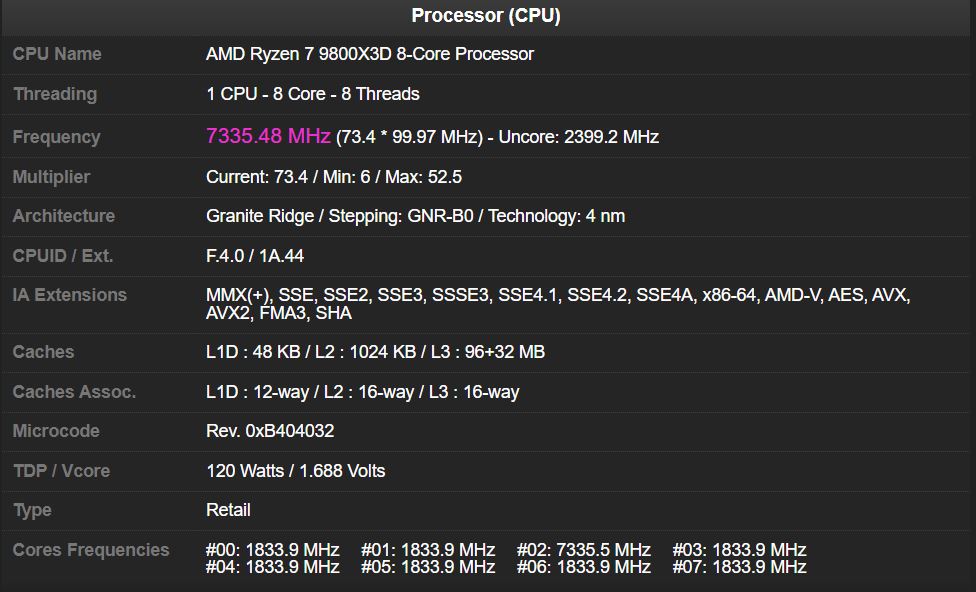
According to reports, Hero had to increase the voltage to 1.68 Volts, significantly higher than the voltage used by Hicookie to achieve 7313 MHz. The frequency record has been validated by CPU-Z, confirming the use of a higher core multiplier than previous records. Additionally, the Uncore speed has increased to 2399 MHz, enhancing memory access and real-world performance. Achieving and sustaining such clocks over time remains a challenge.
The Thrills and Challenges of Extreme Overclocking
Reaching such frequencies is only possible with the use of liquid nitrogen cooling, extremely powerful hardware, and an adept skill set. While the Ryzen 7 9800X3D is hailed as the top gaming CPU, it excels in other tasks as well. However, the sophisticated liquid-nitrogen setups required for such extreme overclocking aren’t feasible for the average user, as they are specifically designed to push hardware to its absolute limits.