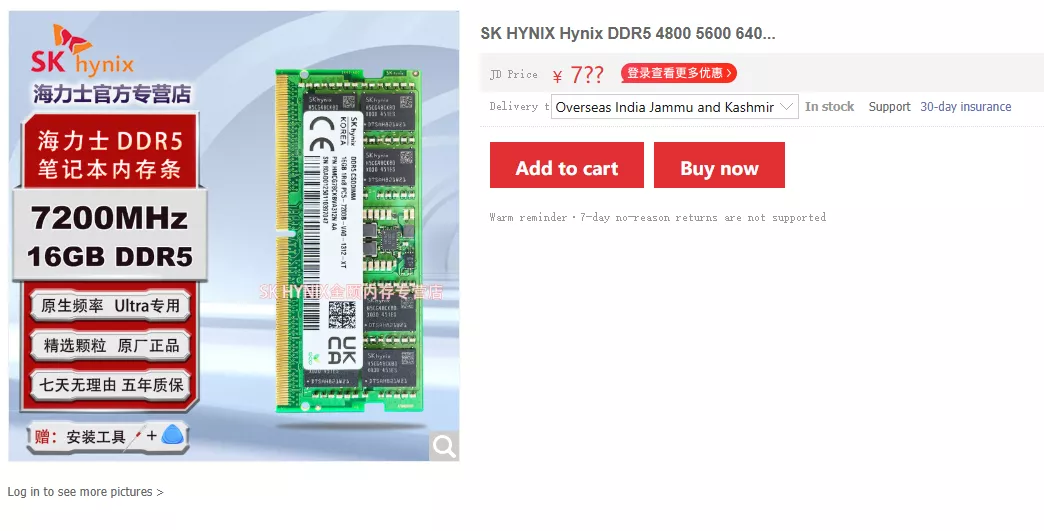

SK Hynix Unveils Blazing 7200 MT/s DDR5 Memory: Get Ready for 2 Gb B-Die and 4 Gb M-Die
The buzz in the tech world centers on SK Hynix’s latest advancements in DDR5 technology, promising an impressive speed boost. With the introduction of memory chips capable of reaching 7200 MT/s, the company is setting a new benchmark in the market. This development has piqued the interest of tech enthusiasts and consumers, as these high-speed chips become available on major e-commerce platforms.
New DDR5 Chips Unveiled
Recent reports highlight SK Hynix’s expansion of its DDR5 lineup. The company, known for pushing technological boundaries, has not only developed 3 Gb A-Die chips rated for 7200 MT/s but has also discreetly revealed three additional dies offering similar speeds. These new entries expand the range of available capacities, indicating a strategic move to cater to varying market needs.
The new DDR5 modules, spotted on JD, a renowned Chinese e-commerce site, feature part numbers not previously seen on the market. This revelation confirms that SK Hynix is actively enhancing its product catalog with a total of four new chips. These chips, denoted by “KB,” offer 7200 MT/s speed with densities ranging from 2 Gb to 4 Gb.
Chip Specifications and Availability
The addition of a 2 Gb B-die and the introduction of a 4 Gb capacity M-die mark significant milestones for SK Hynix. While the 4 Gb density might seem modest compared to some high-capacity alternatives, its potential lies in supporting high-speed, lower-density DDR5 configurations, appealing to a niche market.
| Part Number | Die | Speed | Density |
|---|---|---|---|
| H5CG48CKBD-X030 | C-die | 7200 MT/s | 2 Gb |
| H5CGD8AKBD-X021 | A-die | 7200 MT/s | 3 Gb |
| H5CG58MKBD-X051 | M-die | 7200 MT/s | 4 Gb |
| H5CC48BKBD-X030 | B-die | 7200 MT/s | 2 Gb |
SK Hynix’s introduction of these chips marks an industry milestone in memory speed, reaching an unprecedented 7200 MT/s. This development, while still unofficially announced, underlines the company’s commitment to advancing memory technology. The expected requirement of a 10-layer or 12-layer PCB to support such speeds suggests that these are initial samples, with final products anticipated to offer robust signal integrity.