

As we close out 2025, the landscape of CPU releases highlights a year of incremental upgrades rather than major overhauls. AMD and Intel focused on enhancing their existing product lines, with AMD taking the spotlight in the gaming arena. In the first quarter, AMD introduced several key processors, while later in the year, quieter launches expanded the lineup. These new entries into the market have provided gamers with exciting options, although some of the launches saw limited availability. Despite these challenges, AMD’s Zen 5 and Intel’s Arrow Lake series have been thoroughly tested, offering insights into their capabilities.
Top Gaming CPUs of 2025 Ranked
Best Overall: AMD Ryzen 7 9800X3D
Sale
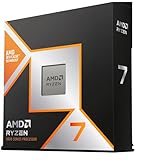
AMD Ryzen 7 9800X3D
Ryzen 7 9800X3D is purely crafted for high-performance gaming. The processor has dominated 2025 without breaking a sweat and should continue to do so for months to come.
| Architecture | Socket | Cores/Threads | L3 Cache | Base/Boost | iGPU | TDP |
|---|---|---|---|---|---|---|
| Zen 5 | AM5 | 8/16 | 96 MB | 4.7/5.2 GHz | RDNA 2, Two cores | 120 W |
| PROS | CONS |
| + Leading gaming performance | – Somewhat expensive |
| + Highly power-efficient | |
| + Decent productivity |

The Ryzen 7 9800X3D has remained at the top of the charts since its launch. It has been one year, and we have no competitor for the 9800X3D that could challenge it at a sub-$500 price point. Surely, AMD did launch competitive higher-end SKUs this year, but the 9800X3D remains overall the best gaming CPU that offers a much better value than the Ryzen 9 9000X3D chips. The CPU launched at $479, but now sees frequent discounts on several stores, dropping even under $449.
Its awesome gaming capability lies in its terrific Zen 5 architecture, coupled with the additional 64 MB L3 cache that lies underneath the CCD hosting those powerful 8 cores. Unlike previous generations, AMD made sure that the CCD can maintain direct contact with the IHS for improved cooling, ensuring the CPU can hit higher clock speeds without thermal throttling. With now full overclocking potential unlocked, the CPU can easily hit over 5.0 GHz on all cores, delivering excellent gaming and productivity performance.
Best Overall Alternate: AMD Ryzen 7 7800X3D
Sale
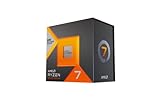
AMD Ryzen 7 7800X3D
For a noticeably lower price, the Ryzen 7800X3D can replace the 9800X3D and still offer competitive gaming performance on AM5 platform. It’s excellent price-to-performance ratio makes it a wonderful alternative in high-end rigs.
| Architecture | Socket | Cores/Threads | L3 Cache | Base/Boost | iGPU | TDP |
|---|---|---|---|---|---|---|
| Zen 4 | AM5 | 8/16 | 96 MB | 4.2/5.0 GHz | RDNA 2, Two cores | 120 W |
| PROS | CONS |
| + Terrific gaming performance | – Lackluster productivity |
| + Offers great price-to-performance ratio | – Lacks manual multiplier-based overclocking |
| + More power-efficient than 9800X3D |

While the Ryzen 9800X3D took the top spot on the list, the Ryzen 7 7800X3D shouldn’t be underestimated. It was difficult for us to choose between the two for the best Overall spot, as the 7800X3D isn’t much behind the 9800X3D in performance. Since its current price point makes it a more attractive choice for gaming, we think it’s a no-brainer for enthusiasts who are looking to save $70-$80 for a slight performance regression.
Except for the architecture and the clocks, the Ryzen 7 7800X3D shares identical specifications in most areas. It brings an awesome Zen 4-based 8-core/16-thread configuration to deliver leading gaming performance for a sub-$400 price point and blows its competitors out of the water easily. The 7800X3D, therefore, remains in the top five best-selling CPUs in most parts of the world, and uses the AM5 platform to keep the upgradeability door open for the users.
Best Budget: AMD Ryzen 5 9600X
Sale
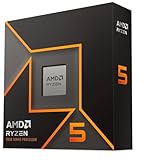
AMD Ryzen 5 9600X
When you are searching for the best $200 gaming processor, the 9600X simply does it best. Despite having retaining the same 6-core/12-thread configuration, it leverages Zen 5 architecture and higher clocks to bring more performance to the table.
| Architecture | Socket | Cores/Threads | L3 Cache | Base/Boost | iGPU | TDP |
|---|---|---|---|---|---|---|
| Zen 5 | AM5 | 6/12 | 32 MB | 3.9/5.4 GHz | RDNA 2, Two cores | 65W-105W |
| PROS | CONS |
| + Impressive gaming and non-gaming performance | – Poor generational uplifts in gaming |
| + Runs cooler than predecessor | – Not the most cost-effective solution |
| + Handles even high-end GPUs easily
|