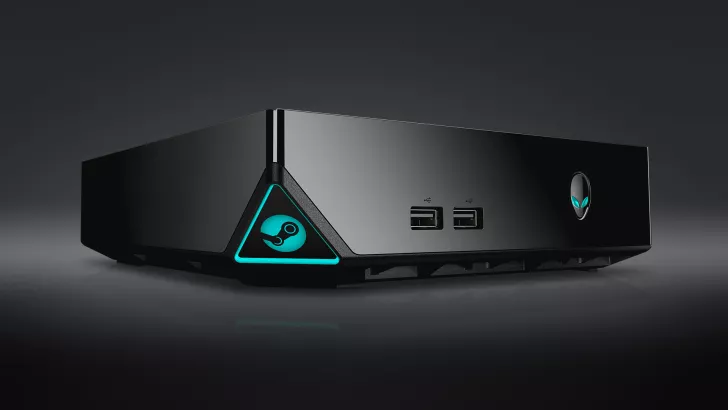


Valve has recently made waves by unveiling their latest innovation, the Steam Machine. However, a closer examination of the device’s specifications reveals potential concerns for gamers. While compact computing has seen significant advancements, Valve’s offering might not fully leverage these developments, which is surprising from the creators of the Steam Deck.
Valve’s Steam Machine: The Specs and Concerns
While it’s too early to pass judgment on the Steam Machine’s performance without official results, an initial look at the specs gives us insight into Valve’s direction. Focusing on its graphics capabilities, the Steam Machine features a semi-custom AMD RDNA 3 GPU with 28 CUs and 8 GB of VRAM. This setup, although utilizing AMD’s FSR technology for enhanced performance, suggests that the machine may only support 1080p gaming natively, with 4K capabilities relying heavily on upscaling.

The Steam Machine’s 8 GB VRAM capacity could hinder its ability to handle modern AAA games seamlessly, potentially limiting texture quality and overall gaming experience. This situation mirrors past criticism faced by NVIDIA and AMD when similar VRAM capacities were met with heavy criticism.
“Steam Machine Isn’t a PC Rival, It’s Actually a Console Counterpart” – Exploring the Comparison
As a console counterpart, the Steam Machine is set to compete with the PlayStation 5 series and Xbox Series X when it launches in early 2026. Comparing these systems, the Steam Machine features 28 CUs and an estimated 17.27 TFLOPS of performance, but with only 8 GB of VRAM, it may struggle to match the capabilities of its competitors, which offer more robust specifications in several areas.

This analysis does not condemn Valve’s strategy outright; instead, it suggests that the Steam Machine’s purpose is more about integrating with the SteamOS ecosystem than competing at the highest performance level. However, given the timeline and current industry standards, the Steam Machine might face challenges in widespread adoption due to its specifications and market positioning.
Valve’s Steam Machine: Will Older GPUs Get a New Lifeline?
Despite its limitations, the Steam Machine’s VRAM capacity could offer a lifeline to gamers with older GPUs. With Valve’s influence over developers, game requirements might be tailored to ensure compatibility, potentially allowing GPUs with limited memory to remain viable options for budget gamers. This strategy would require Valve to carefully consider pricing, as past iterations faltered due to high costs and inadequate game compatibility.